


Author: Derek Beres / Source: Big Think
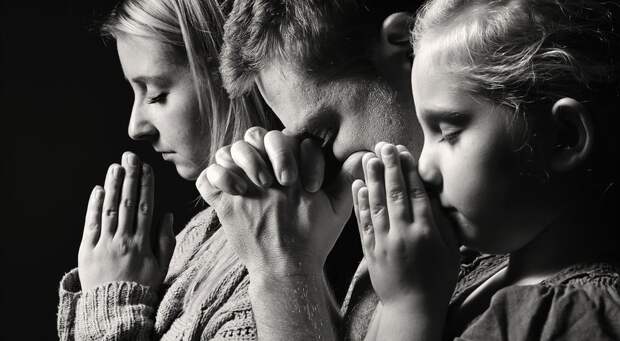
In 2009, Joseph Henrich, a professor in the Psychology and Economics departments at the University of British Columbia (now at Harvard), proposed the idea of Credibility Enhancing Displays (CREDs). He was looking for a term to signify people that “convey one mental representation but actually believe something else.
” At the very least, he continues, they fudge their level of commitment.
How Atheist Values Help Correct Religion’s Mistakes Rob Bell
Play Video
Play
Mute
Current Time 0:00
/
Duration Time 0:00
Loaded: 0%
Progress: 0%
Stream TypeLIVE
Remaining Time -0:00
Playback Rate
1
- Chapters
Chapters
- descriptions off, selected
Descriptions
- subtitles off, selected
Subtitles
- captions settings, opens captions settings dialog
- captions off, selected
Captions
Audio Track
Fullscreen
This is a modal window.
Caption Settings Dialog
Beginning of dialog window. Escape will cancel and close the window.
TextColorWhiteBlackRedGreenBlueYellowMagentaCyanTransparencyOpaqueSemi-TransparentBackgroundColorBlackWhiteRedGreenBlueYellowMagentaCyanTransparencyOpaqueSemi-TransparentTransparentWindowColorBlackWhiteRedGreenBlueYellowMagentaCyanTransparencyTransparentSemi-TransparentOpaque
Font Size50%75%100%125%150%175%200%300%400%
Text Edge StyleNoneRaisedDepressedUniformDropshadow
Font FamilyProportional Sans-SerifMonospace Sans-SerifProportional SerifMonospace SerifCasualScriptSmall Caps
DefaultsDone
How Atheist Values Help Correct Religion’s Mistakes
Rob Bell
Author, “How To Be Here: A Guide to Creating a Life Worth Living”
04:09
Henrich coined this term to make sense of manipulability, especially in regards to religious belief.
While his focus was on cultural learning through evolutionary history, extrapolating to apply CREDs to politics doesn’t tax our imagination. In fact, he argues that CREDs are an essential component of tribalism; they help you identify with a group and strengthen in-group bonds. Throughout history, this would have been a very useful device, yet evolutionary biology didn’t foresee the development of societies containing hundreds of millions of people. Our minds might move a million miles an hour but deeply ingrained habits do not.To make his case, Henrich turned to ritualized theater, such as firewalking and animal sacrifice. Such costly displays, he writes, “transmit higher levels of belief commitment and thereby promote cooperation and success in intergroup or interinstitution competition.” The more audacious a display, the more likely we’ll buy into what’s being sold, even if the seller is focused more on your purchase than the item itself.

Though we can spend pages applying this to the American electoral cycle, we’ll instead turn to Joseph Langston, who recently applied CREDs to the onset of atheism. As with everything religion and politics, there is plenty of inherent crossovers.
The Age of Atheism
Langston, a Ph.D. student at New Zealand’s Victoria University and a researcher at the Atheist Research Collaborative, wanted to know when people become atheists. He realized CREDs provided a good means of measuring this, according to his new study, published in Religion, Brain & Behavior. It turns out that parents that talk about religion but fail to practice what they preach are more likely to produce little deniers.
Would an Atheist World Be More Moral? Robert Wright
Play Video
Play
Mute
Current Time 0:00
/
Duration Time 0:00
Loaded: 0%
Progress: 0%
Stream TypeLIVE
Remaining Time -0:00
Playback Rate
1
- Chapters
Chapters
- descriptions off, selected
Descriptions
- subtitles off, selected
Subtitles
- captions settings, opens captions settings dialog
- captions off, selected
Captions
Audio Track
Fullscreen
This is a modal window.
Caption Settings Dialog
Beginning of dialog window. Escape will cancel and close the window.
TextColorWhiteBlackRedGreenBlueYellowMagentaCyanTransparencyOpaqueSemi-TransparentBackgroundColorBlackWhiteRedGreenBlueYellowMagentaCyanTransparencyOpaqueSemi-TransparentTransparentWindowColorBlackWhiteRedGreenBlueYellowMagentaCyanTransparencyTransparentSemi-TransparentOpaque
Font Size50%75%100%125%150%175%200%300%400%
Text Edge StyleNoneRaisedDepressedUniformDropshadow
Font FamilyProportional Sans-SerifMonospace Sans-SerifProportional SerifMonospace SerifCasualScriptSmall Caps
DefaultsDone
Would an Atheist World Be More Moral?
Robert Wright
Author, “The Evolution of God”
02:42
CREDs are not…
The post Study discovers how and why—and when—people become atheists appeared first on FeedBox.