


Author: Bruce Bower / Source: Science News
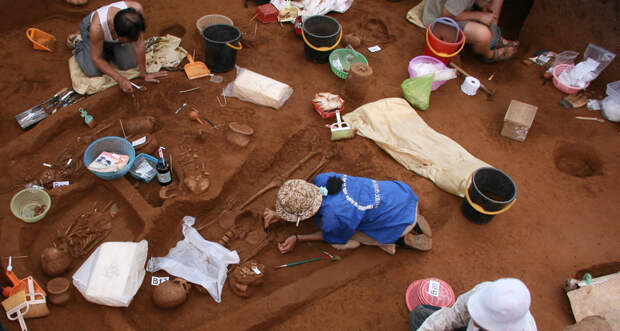
People who moved out of southern China cultivated big changes across ancient Southeast Asia, a new analysis of ancient human DNA finds.
Chinese rice and millet farmers spread south into a region stretching from Vietnam to Myanmar. There, they mated with local hunter-gatherers in two main pulses, first around 4,000 years ago, and again two millennia later, says a team led by Harvard Medical School geneticist Mark Lipson. Those population movements brought agriculture to the region and triggered the spread of Austroasiatic languages that are still spoken in parts of South and Southeast Asia, the scientists conclude online May 17 in Science.
Over the past 20 years, accumulating archaeological evidence has pointed to the emergence of rice farming in Southeast Asia between 4,500 and 4,000 years ago, accompanied by tools and pottery showing links to southern China. Austroasiatic languages now found from Vietnam to India contain words for rice and agriculture, suggesting that ancient arrivals from southern China spoke an Austroasiatic tongue. Questions have remained, though, about where Austroasiatic languages originated and whether knowledge about farming practices, rather than farmers themselves, spread from China into Southeast…
The post Ancient Chinese farmers sowed literal seeds of change in Southeast Asia appeared first on FeedBox.