


Author: Cameron Summerson / Source: reviewgeek.com
You have a nice bike. You love riding your bike, but you’re also looking to add that one piece of gear that will take your ride from great to truly amazing. Worry not, friends, we have just what you need.
One of the coolest things about cycling is that it can be as simple or as advanced as you want it to be.
If you want a pure, simple “analog” experience, you can absolutely have that. But if you want to add some tech to your ride, there are some very cool accessories to tech up your spin.For example, you can dig into your cycling dynamics and stats with a smart cycling computer. Or you can up your indoor workout game with a smart trainer. If you’re looking for increased safety on the road, there are a lot of great accessories out there for that too! We’re going to take a closer look at all of those things (and more!)—let’s dig in.
Smart Cycling Computers: Advanced Statistics in a Small Package
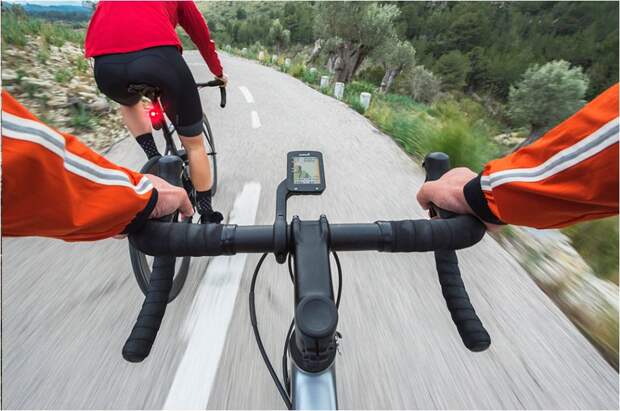
If you’re a serious sort of cyclist, there’s a good chance you have some sort of cycling computer—be that a small head unit with a speed sensor, or even your smartphone. While those are both very useful, if you’re looking to get deeper statistics for each ride, you’re going to want a smart computer.
These computers look very similar to what you may be used to seeing: small, out-front head units that you can attach to your bike’s handlebars. The difference lies in what they can do versus your traditional computer or smartphone.
For one, these computers have a bevvy of of advanced features, like GPS activity tracking that’s more accurate than anything your smartphone can do, and the option to add third-party tools, like heart rate and cadence sensors, and a lot more.
Not only that, but the majority of these computers also offer cool features that allow other people to see your activity as you ride, which is an excellent safety feature. To further add to this, many also have some sort of accident detection that will alert specific people (user-defined, of course) if you were to get into an accident. They use built-in GPS and accelerometers to detect sudden changes in direction.
When it comes to choosing a cycling computer, there are two names that really stand above the rest: Garmin and Wahoo.

The former is a known giant in the GPS market, and offers the most popular cycling computers on the market with its Edge line. The latter, however, is a relative newcomer that has really been making waves in the cycling computer scene with its Elemnt computers.

Both companies have good breakdowns of what you can get with each computer on their respective websites, so if you’re it really comes down to figuring out how much (or little) computer you need, start there to compare—there are, however, benefits to going with Garmin, which we’ll talk about in the next section.
Smart Headlights/Taillights: See and Be Seen with These Tools

When it comes down to it, road cycling can be dangerous. You’re really exposing yourself out there—sharing the road with huge, speeding boxes of metal while putting your trust into the human being controlling them can be a little bit unnerving.
That’s why it’s imperative to be seen while you’re on the road. Bright colored cycling gear can help with this, but you can also take things a step further with smart lights. When it comes to smart lights, one brand stands above the rest: Garmin. Earlier I mentioned that there are benefits to going with Garmin for your head unit, and this—hands down—why you should.
The company offers both a headlight and taillight as part of its Varia series—these are smart safety accessories designed for cyclists and made to work with Garmin Edge head units. The Varia UT800 is an 800 lumen smart headlight that will automatically adjust brightness levels depending on outside conditions and pairs up with an Edge unit to for auto-on/off.

While the headlight is a cool accessory on its own, the taillight is where the Varia series really earns its keep as a safety system. The Varia Radar is so much more than a simple taillight—it’s an actual vehicle detection system that can alert you when cars are approaching from the rear. It indicates when cares are coming using digital indicators on the side of a compatible Edge head unit, as well as the speed of the approaching vehicle with a color coding system. If you don’t have an Edge head unit, there’s also a version of the radar with a standalone accessory that shows when cars are coming up behind you.
As useful as it is, however, it’s worth pointing out that the Radar is not meant as a replacement for turning around and looking behind you to see make sure the road is clear before turning, changing lanes, etc. But it’s great for staying alert and knowing when cars are approaching so you can make sure the drivers are being safe.
The newest version of the Varia Smart Headlight is $149, while the newest Radar (RTL510) starts at $199 for the unit only, and $299 for the standalone bundle.
Power Meter: A Way to Quantify How Hard You’re Really Working

When it comes to measuring work on the bike, speed, cadence, and heart rate data are only part of the story. And if you’re looking to step your training game up a notch, there is no better way to do it than with a power meter. These are accessories that measure the force in which you’re pushing down on the pedals (measure in Watts), which can give you very clear stats on how hard you’re working.
For example, let’s say you’re riding with a 12 MPH tailwind—you’ll be able to pull of higher speeds with less work; on the opposite side of that coin, you’ll work harder to go slow with a 12 MPH headwind. While this is reflected in your speed and possibly your heart rate data, your computer or tracking application has no way of knowing how hard you’re really working.
Similarly, if you’re thinking of getting into any sort of interval-based training, a power meter is the only way to know that you’re hitting “your numbers.” Otherwise, it’s “go as hard as you can for 90 seconds, then recovery for 90 seconds”—while that may work well for marginal gains in the beginning, you’ll get much better results when actual numbers are involved.
But power meters aren’t just for active racers looking to push high watts or do interval training. Power meters are also great for century or randonneur riders to help with pacing. The key to any endurance event is proper pacing, especially at the beginning. Many riders have a tendency to go out too hard at the start of a ride, only to lose all stamina later and either be unable to complete the ride or finish on a completely empty tank. Since a power meter quantifies how hard you’re actually working, it’s an excellent tool to help you prevent turning the pedals over too hard at the start of an event so you can make sure you have something left in the tank at the…
The post The Best Tech Accessories for Cyclists appeared first on FeedBox.