


Author: Robby Berman / Source: Big Think
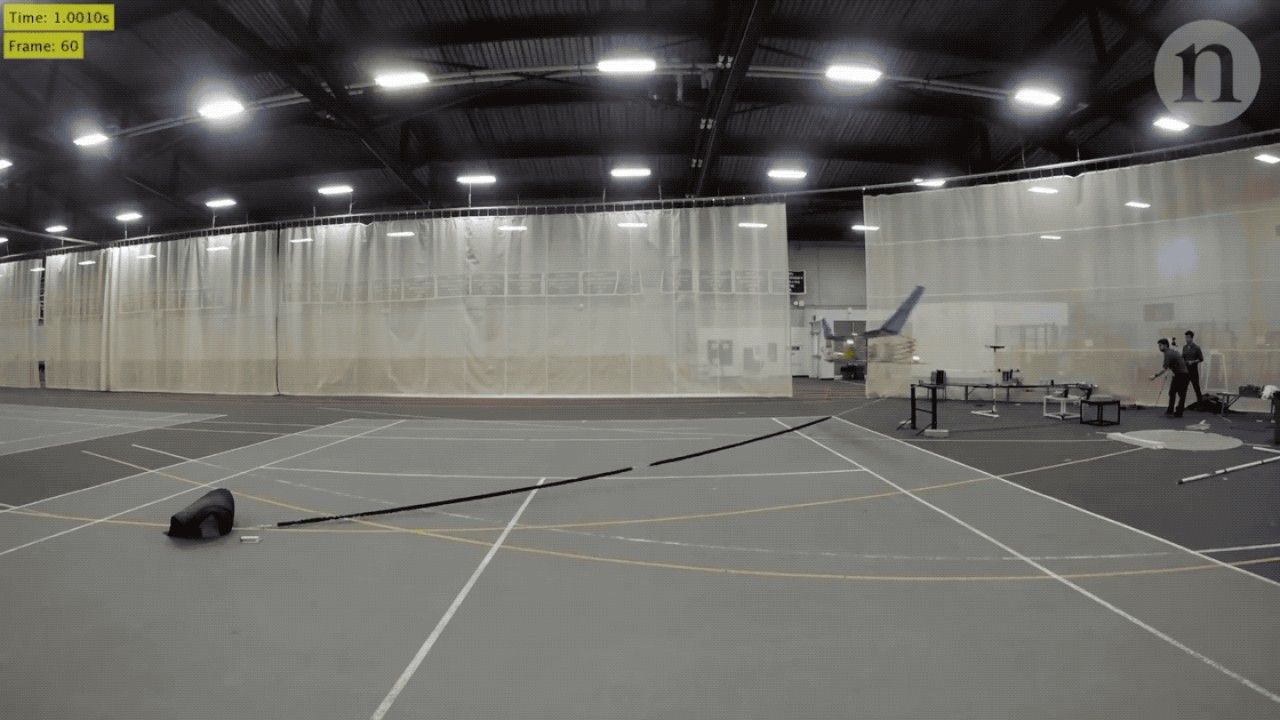
- A team of scientists at MIT have flown the first ionic-wind aircraft
- It’s the first successful test of the emission-free technology
- Imagine silent aircraft gliding overhead
In February 1904, the Wright Brothers first achieved flight at Kitty Hawk, North Carolina.
Their time aloft was brief, less than 12 seconds, and the distance their craft traveled just 36.6 meters, but the moment made history as a demonstration of a new technology that might someday lead to air travel, which, of course, it did. According to research published November 21 in Nature, what may turn out to be a similarly world-changing set of flights recently took place about a half-meter above the polished floor of the DuPont Athletic Center at Massachusetts Institute of Technology. Though the 2.45 kilogram prototype ultimately flew a bit further, about 60 meters, and was in the air only an average of 10 seconds, these were the first sustained flights ever by plane propelled via ionic wind. This form of propulsion requires no moving parts, is silent, and, most significantly, doesn’t require the burning of fuel. (Airplanes are the source of 11% of U.S. transportation-related emissions.) As MIT’s associate professor of aeronautics and astronautics Steven Barrett says, the days of propellers and combustion engines are numbered: “The future of flight should be more like what you see in Star Trek, with kind-of a blue glow, and something that silently glides through the air.”The MIT ionic drive plane
Barrett’s team decided to try and develop a prototype that roughly resembles a traditional airplane, with a 5-meter wingspan.
Its power source is a 500W battery, which also makes the ionic-wind prototype the first fully solid-state aircraft ever to fly.Beneath the MIT craft’s wings are mounted two stacks of four electrode arrays each, one stack in front, and one in back. Each array consists of a very thin, very high-voltage wire in…
The post The first successful flight of an ionic-wind aircraft appeared first on FeedBox.