


Author: Dr. Jamie Schwandt / Source: Lifehack

I think you’ll agree with me when I say:
“We do not understand the difference between Information and Knowledge.”
As it turns out, most people assume they are the same thing, yet they are not. In fact, Information is required for Knowledge, but we are missing one key element… “Thinking”.
In this article, we will look into the process of learning information, and how we can really transfer it into learned knowledge.
What is transfer of learning
Professors at Cornell University and authors of Thinking at Every Desk, Derek and Laura Cabrera inform us that Knowledge = Information X Thinking. They are on a mission to introduce “Thinking” back into the classroom. Let me demonstrate one way in which they are doing this.

Through the Cabrera’s Systems Thinking theory of Distinctions – Systems – Relationships – Perspectives (DSRP = “Thinking”), they show us how disparate subjects are interconnected and that DSRP increases our speed of knowing something. Essentially, it will increase our transfer.
Transfer is a way to learn something in one area and apply it in another. We can do this through a variety of ways, yet let’s examine two:
- Vertical Transfer (also known as Far Transfer). A child learns something in third grade and applies it in fourth grade (or even as an adult). This is the more difficult form of transfer as you are applying what you are learning to something completely different — like learning the game of Wei-chi (aka Go) and applying it to strategy.
- Horizontal Transfer (also known as Near Transfer). A student learns something in one subject (i.e. English) and transfers it to another (i.e. Math).
The Cabrera’s illustrate the significance of the transfer of learning. In fact, if a student or person has a high transfer, he or she will then become their own best teacher. As mentioned in Thinking at Every Desk,
“If a student has a high transfer skills, she can learn one thing and then teach herself 10, 50, or 100 additional things.”
Thinking about thinking
When we understand the importance of transfer of learning and use DSRP to bring it about, we see phenomenal results in three important areas:1
- Increased Metacognition (thinking about thinking).
- Increased Deep Understanding (you learn the difference between analysis and synthesis).
- Increased Transfer (you are able to make vertical and horizontal connections).

Let’s examine some practical approaches to use in the discovery of these hidden ideas:
Break Apart + Put Back Together = Learning
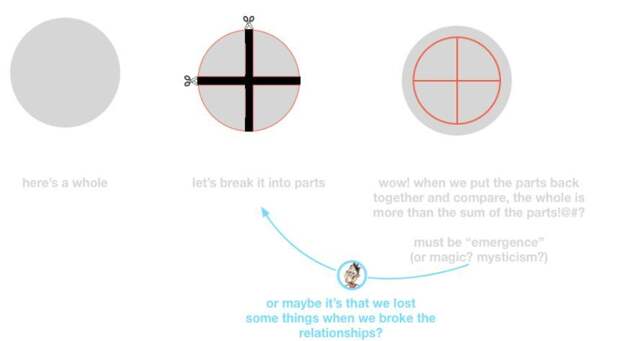
My absolute favorite transfer of learning technique is one outlined by the Cabrera’s in Systems Thinking Made Simple:New Hope for Solving Wicked Problems. The technique is the “Parts Lessons Firetruck” and is a fun exercise to use with your children.
Using this technique with my 3-year old daughter, I had the opportunity to…
The post Learn How to Learn: How to Understand and Connect Difficult Ideas Easily appeared first on FeedBox.